
Smarter Metrics for Brands: Measuring What Really Matters in the Digital Age (Part 4)

Updated: Jan 21
Caption: Drowning in vanity graphs? CTR won’t save you—grab the LTV life ring and head for retention.
This is part 4 of our 5-part series exploring the critical difference between clicks and engagement in modern marketing.
The marketing measurement landscape has reached a critical juncture. Whilst brands pour millions into digital campaigns, many are still tracking success using metrics that tell them virtually nothing about genuine customer relationships or business impact. It's time for a fundamental shift in how we measure what matters.
The reality? Those impressive click-through rates and website visit numbers you've been celebrating might be masking a much darker truth about your brand's actual performance. Smart marketers in 2025 are abandoning vanity metrics and embracing measurement strategies that reveal authentic customer connections and predictable business outcomes.
The Vanity Metrics Trap
Traditional digital metrics create a dangerous illusion of success. High click-through rates can coexist with terrible brand sentiment. Massive website traffic can generate zero qualified leads. Social media impressions can reach millions whilst building no meaningful brand equity.
Consider this: a clickbait headline might drive 50,000 website visits, but if visitors immediately bounce because the content doesn't match their expectations, you've actually damaged your brand reputation whilst celebrating a "successful" campaign. This disconnect between surface-level metrics and genuine brand health has created a measurement crisis across industries.
The problem compounds when marketing teams optimise for these misleading indicators. Chasing clicks leads to sensationalist content strategies that erode brand trust. Prioritising impressions over engagement creates campaigns that interrupt rather than attract. Focusing on volume over quality attracts the wrong audience entirely.
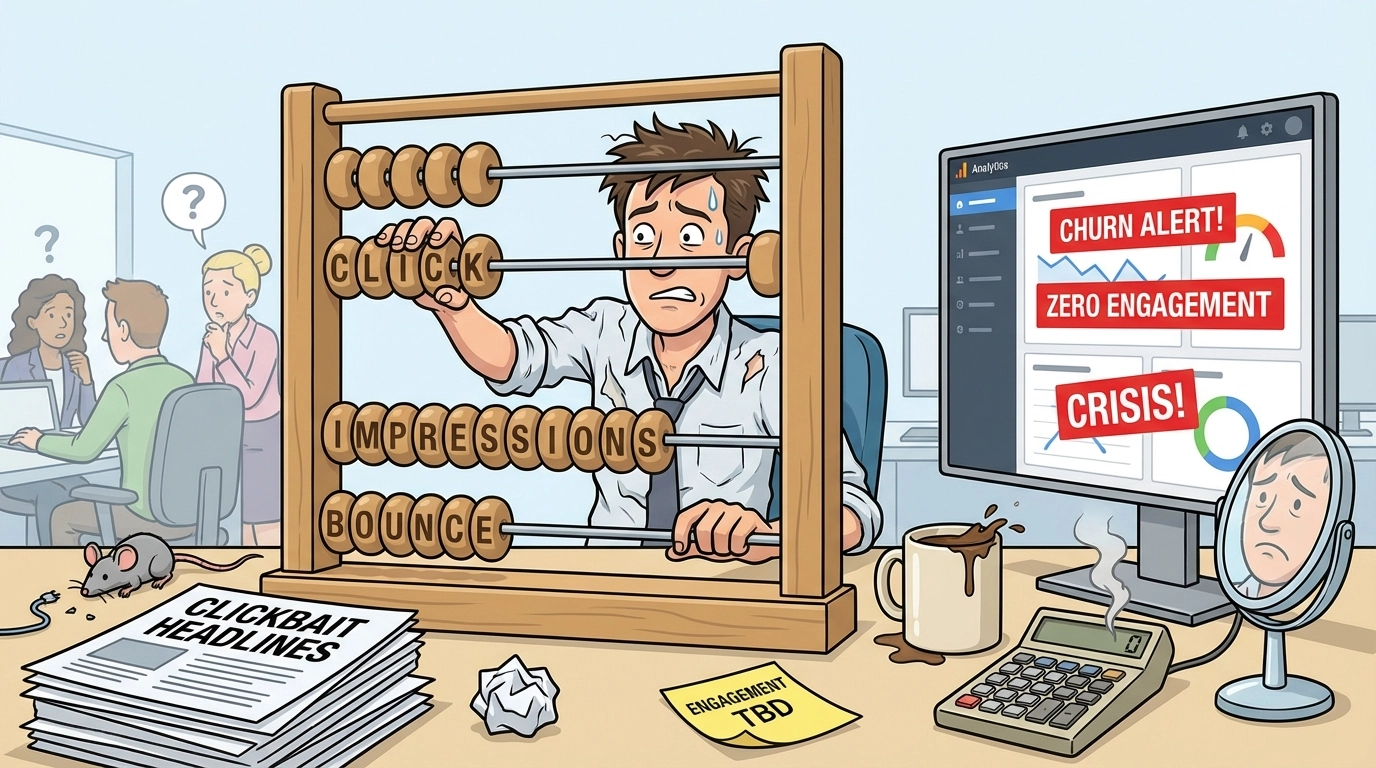
Caption: Abacus at full tilt, dashboard begging for engagement—counting clicks isn’t a strategy.
The Foundation: Brand Health Metrics
Smart measurement begins with understanding your brand's fundamental health indicators. These core metrics provide the foundation for all other measurement activities and directly correlate with long-term business performance.
Brand Awareness and Recall represent your market position's bedrock. Unaided brand recall: when customers mention your brand without prompting: indicates genuine mindshare within your target market. Aided awareness shows your potential market reach, but recall demonstrates actual mental availability when purchase decisions occur.
Track these through quarterly brand tracking surveys, social listening for unprompted brand mentions, and direct search volume analysis. The goal isn't just recognition; it's achieving top-of-mind status within your category.
Net Promoter Score (NPS) cuts through marketing noise to reveal customer loyalty reality. This single metric captures both satisfaction and advocacy potential, making it invaluable for predicting organic growth. However, NPS becomes exponentially more powerful when segmented by customer journey stage, product category, or acquisition channel.
Brand Sentiment Analysis has evolved far beyond basic positive/negative categorisation. Modern sentiment tracking identifies emotional drivers, contextual triggers, and sentiment velocity: how quickly opinions change following brand interactions. This real-time insight enables proactive reputation management rather than reactive crisis response.
Engagement Metrics That Predict Success
Moving beyond brand health, sophisticated marketers focus on engagement indicators that directly correlate with purchase intent and customer lifetime value.
Content Engagement Depth measures how thoroughly audiences consume your brand content. This includes scroll depth on blog posts, video completion rates, podcast episode retention, and email newsletter click-to-open ratios. High engagement depth indicates content-audience alignment and suggests genuine interest rather than casual browsing.
Track these metrics across content types to identify which formats resonate most strongly with different audience segments. Long-form content with high completion rates often indicates high-intent prospects, whilst short-form content with high sharing rates suggests broad brand affinity.
Community Participation Metrics reveal whether you're building genuine brand communities or merely broadcasting to passive audiences. Monitor forum post quality, webinar attendance rates, user-generated content frequency, and customer referral patterns. These behaviours indicate emotional investment in your brand beyond transactional relationships.

Caption: Community beats commotion—conversations on the left, crickets on the right.
Repeat Engagement Patterns distinguish between one-time interactions and developing relationships. Track returning website visitors, email re-engagement rates, social media conversation participation, and content series consumption. Customers who repeatedly engage across multiple touchpoints demonstrate higher purchase intent and lifetime value potential.
Advanced Attribution and Journey Mapping
Modern measurement requires understanding how different touchpoints contribute to ultimate business outcomes. This demands sophisticated attribution modelling that moves beyond last-click attribution to recognise the entire customer journey.
Multi-Touch Attribution reveals which marketing activities truly drive conversions versus those that simply happen to occur before purchases. This insight prevents budget misallocation and helps optimise campaign timing across the entire funnel.
Implement data-driven attribution models that assign conversion credit based on actual influence rather than proximity to purchase. This often reveals that brand awareness activities and early-funnel content contribute more to revenue than traditional performance marketing tactics suggest.
Customer Journey Analytics map how prospects progress through awareness, consideration, and purchase phases across multiple touchpoints. Understanding these pathways enables more strategic campaign orchestration and helps identify where prospects typically disengage.
Focus particularly on identifying high-value journey patterns: the specific sequence of interactions that most reliably lead to qualified conversions. These patterns become templates for scaling successful customer acquisition strategies.
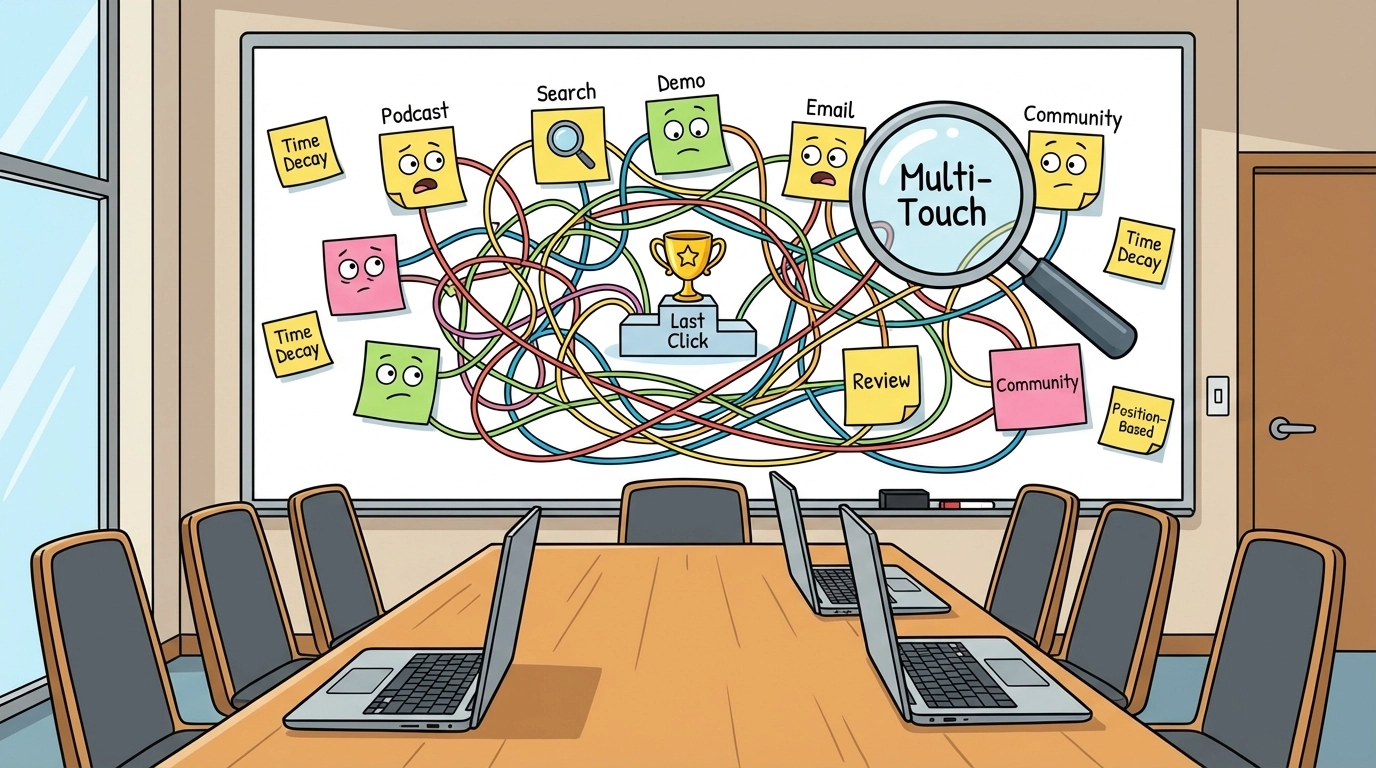
Caption: Last click takes a victory lap—until Multi-Touch checks the replay.
Real-Time Monitoring and Response
Static monthly reports no longer suffice in today's dynamic digital environment. Brands need measurement systems that enable immediate response to emerging opportunities and threats.
Social Sentiment Velocity tracking identifies when brand perception shifts rapidly, enabling proactive response before issues escalate. This involves monitoring not just sentiment direction, but the speed and volume of sentiment changes across social platforms, review sites, and news coverage.
Campaign Performance Anomalies detection helps identify when campaigns perform significantly better or worse than expected, allowing for immediate optimisation or scaling decisions. This requires establishing baseline performance ranges and automated alerting when metrics fall outside normal parameters.
Competitive Measurement provides context for your brand's performance relative to market dynamics. Track share of voice, sentiment comparison, and engagement rate benchmarks against key competitors to understand whether performance changes reflect brand-specific issues or broader market trends.
Implementation Strategy
Transitioning to smarter metrics requires systematic change across measurement practices, team capabilities, and technology infrastructure.
Start by conducting a comprehensive audit of current measurement practices. Identify which metrics actually correlate with business outcomes versus those that simply feel impressive. This often reveals shocking disconnects between celebrated metrics and revenue impact.
Invest in integrated analytics platforms that connect customer behaviour across all touchpoints. Siloed measurement tools create blind spots that prevent understanding true customer journey dynamics.

Caption: Monthly metrics towers look impressive—right up to the wobble. Swap in NPS, sentiment and CLV before gravity audits your deck.
Train team members to interpret engagement indicators and brand health metrics rather than just surface-level performance indicators. This capability shift often requires bringing analytical skills in-house rather than relying solely on agency reporting.
Establish regular cross-functional measurement reviews that connect marketing metrics with sales outcomes, customer success indicators, and broader business performance. These sessions help identify which marketing activities truly drive business growth rather than just campaign metrics.
The Measurement Evolution
The brands winning in today's marketplace aren't those generating the most clicks or impressions: they're the ones building genuine customer relationships that translate into sustainable business growth. This requires measurement sophistication that goes far beyond traditional digital marketing metrics.
By focusing on brand health, authentic engagement, and customer journey optimization, you create measurement systems that guide strategic decision-making rather than just campaign reporting. These insights enable predictable growth based on genuine customer value rather than marketing manipulation.
The future belongs to brands that measure what matters: customer relationships, brand equity, and authentic engagement that drives real business outcomes. The question isn't whether your campaigns generate clicks: it's whether they build lasting value for both customers and your organisation.
The Clicks v Engagement Debate
The Clicks v Engagement Debate is a five-part thought leadership series exploring how modern brands are moving beyond clicks and impressions toward smarter, more meaningful engagement metrics. It examines the limitations of traditional digital reporting and highlights how leading marketers are reshaping their measurement frameworks for real commercial impact.
The Click v Engagement Myth: Why brands need to stop chasing empty numbers
Are brands finally waking up to engagement? How modern marketers are changing their playbook
Fake news, fake traffic, and what advertisers get wrong about online success
Smarter metrics for brands: Measuring what really matters in the digital age
Are advertisers stuck in old habits? Breaking away from the clicks-first mindset


Comments