
Fake News, Fake Traffic, and What Advertisers Get Wrong About Online Success (Part 3)


Cartoon chaos in the newsroom: publishers cranking the click machine while ad stats gush from monitors. Relax — we’re here for readers, not rubbernecking robots.
This is Part 3 of our 5-part series exploring the critical difference between clicks and genuine engagement. Read Part 1: The Click vs Engagement Myth and Part 2: Are Brands Finally Waking Up to Engagement?
Every day, advertisers pour $71 billion down a digital drain they can't even see. It's not a typo: that's how much money brands waste annually on fake traffic, bot clicks, and artificially inflated metrics that look impressive on dashboards but deliver zero business value.
The uncomfortable truth? Your marketing strategy might be built on a foundation of lies.
While the fake news epidemic dominates headlines about misinformation and social media manipulation, a parallel crisis quietly devastates marketing budgets across Australia and globally. Fake traffic: generated by bots, click farms, and sophisticated fraud networks: has created an alternate reality where advertisers optimise campaigns based on phantom engagement and celebrate metrics that mean absolutely nothing.
The Invisible Enemy Draining Your Budget
Fake traffic isn't some abstract concept affecting other people's campaigns. It's a sophisticated ecosystem designed to separate you from your advertising dollars while making you believe you're winning.
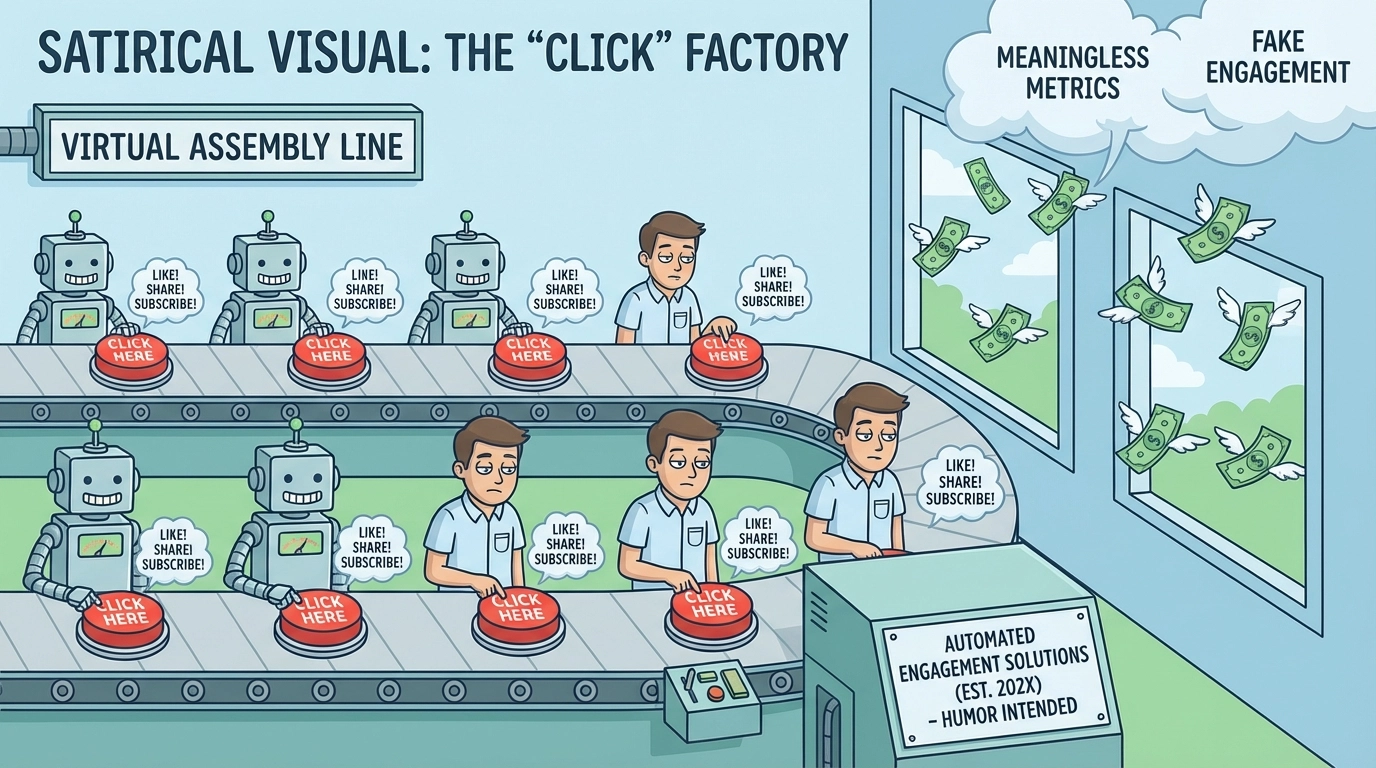
Click farm chic: robots and bored humans mashing 'BUY NOW' like it's a team sport. Your budget? Confetti in the breeze.
Bot Networks and Click Fraud represent the most common threat. Automated programs systematically click on advertisements to inflate engagement numbers, creating the illusion of campaign success. These bots operate 24/7, generating consistent traffic patterns that look legitimate until you dig deeper.
Click Farms take human deception to industrial scale. Warehouses full of low-paid workers armed with smartphones and computers manually click advertisements across multiple accounts and devices. What makes this particularly insidious is that click farm traffic often passes basic fraud detection because real humans generate it: they're just not genuine potential customers.
Proxy Server Manipulation masks traffic origins, making fraudulent activity appear geographically distributed and legitimate. Fraudsters route bot traffic through proxy servers worldwide, creating the appearance of organic global interest in your products or services.
Cookie Stuffing and Affiliate Fraud corrupt attribution models by artificially triggering conversion tracking without genuine user interaction. Fraudsters stuff multiple affiliate cookies onto users' browsers, claiming credit for conversions they didn't influence.
The scale is breathtaking: over 40% of all internet traffic is invalid. That's not a small problem requiring minor adjustments: it's a fundamental corruption of the data advertisers use to make strategic decisions.
How Phantom Metrics Corrupt Real Business Decisions
The real damage isn't just wasted advertising dollars: it's the compounding effect of making strategic decisions based on corrupted data.
Resource Misallocation Creates a Downward Spiral
Picture this scenario: Your automotive dealership invests $10,000 in a digital campaign that reports 100,000 website visitors with strong engagement metrics. Based on these impressive numbers, you double the budget for similar campaigns while reducing investment in proven channels like local radio sponsorship and community event partnerships.
Three months later, you discover that 90% of that "traffic" was generated by bots. Your actual human visitors numbered closer to 10,000, with conversions matching that reality. Meanwhile, your reduced investment in traditional channels has weakened your market presence exactly when competitors increased their local engagement.
This cascading effect explains why some businesses suddenly find their marketing less effective despite increased digital spending. They're optimising for phantom success while starving genuine engagement channels of resources.
Analytics Corruption Spreads Throughout Decision-Making
Fake traffic doesn't just inflate top-line metrics: it corrupts the ratios and benchmarks that guide campaign optimisation. When bots artificially inflate click-through rates, cost-per-click calculations become meaningless. When fraud networks generate fake conversions, your return on ad spend calculations bear no relationship to reality.
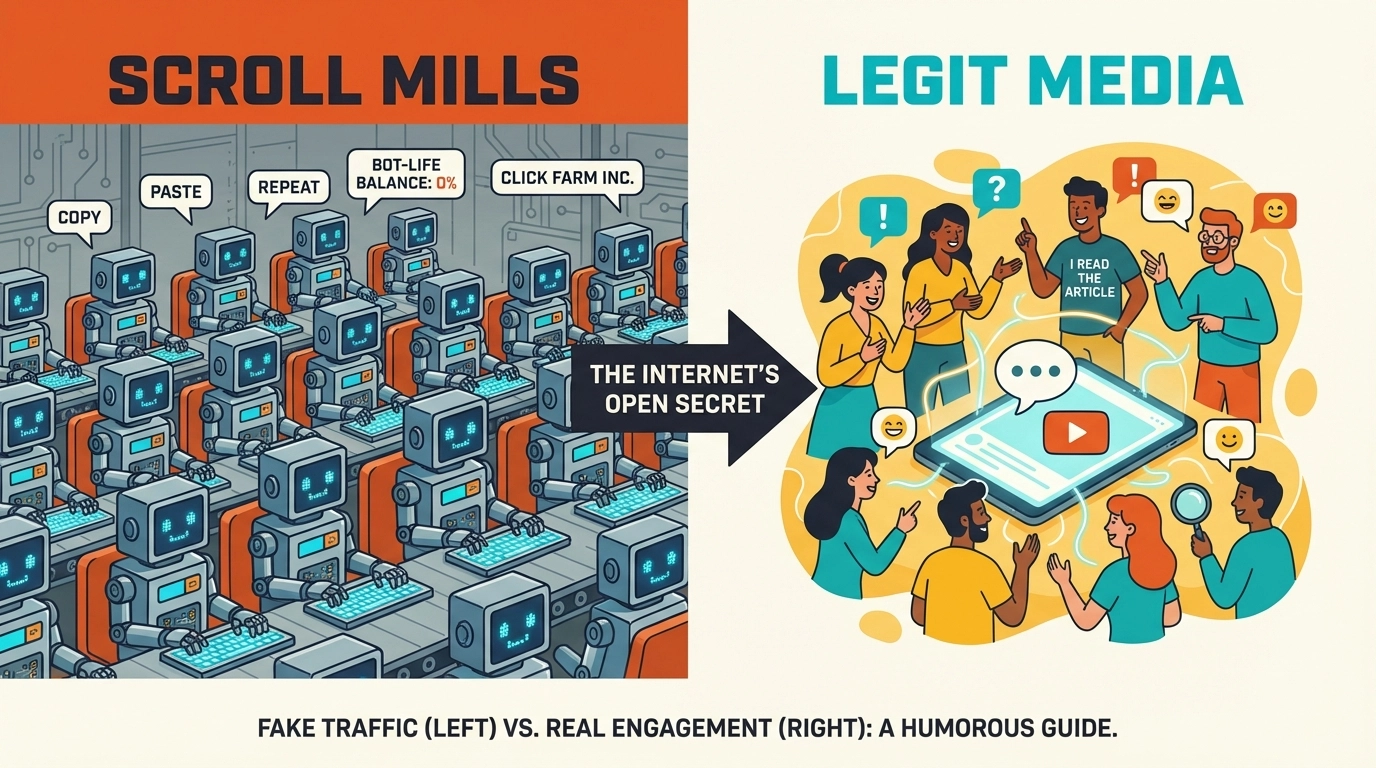
Scroll Mills vs Legit Media: one drowns you in rubbernecking robots; the other earns attention the old-fashioned way — with value.
Consider an e-commerce retailer analysing product performance based on website traffic. High bot activity around certain product categories creates false signals about customer preferences, leading to inventory decisions, pricing strategies, and product development choices based on non-existent demand.
The implications extend beyond marketing into core business strategy, affecting everything from hiring decisions to market expansion plans.
Industry-Specific Vulnerabilities Reveal Deeper Problems
Different industries face unique fake traffic challenges that expose how fundamentally advertisers misunderstand online success.
E-commerce and Retail suffer the highest impact, with fake clicks comprising nearly 60% of ad fraud costs. Australian retailers competing for high-value keywords often celebrate traffic spikes without questioning their authenticity. A Melbourne furniture retailer might allocate substantial budget to Google Ads based on impressive click volumes, only to discover that international bot networks generated most of that activity.
Real Estate faces a 17.42% invalid traffic rate, with bots manipulating property listings and generating fake enquiries. Sydney and Melbourne real estate agents paying $2.37 to $95 per click for premium keywords face devastating ROI destruction when fraud networks consume their budgets without delivering genuine prospects.
Financial Services attracts fraudsters specifically because of high-value keywords and significant click costs. Australian banks and financial advisors targeting competitive terms face 15.96% invalid traffic rates, with sophisticated fraud networks designed to exploit their higher cost-per-click rates.
Travel and Tourism experiences fraud spikes during peak booking seasons: exactly when Australian travel companies need legitimate traffic most. During school holiday periods or major events, fake clicks can comprise 36% of total activity, devastating campaign profitability during crucial revenue windows.
The Revenue Opportunity Cost Nobody Calculates
Beyond direct advertising waste, fake traffic destroys revenue opportunities through corrupted optimisation and misallocated resources.
With average e-commerce Return on Ad Spend (ROAS) at 4:1, the $71 billion wasted on fake traffic represents approximately $142 billion in lost revenue opportunities. These aren't just theoretical numbers: they represent genuine business growth captured by competitors with cleaner traffic and better fraud detection.

Australian businesses face additional challenges when competing against international companies with sophisticated fraud detection. While local SMEs celebrate inflated traffic metrics, global competitors with advanced analytics identify and eliminate fake traffic, allowing them to optimise campaigns based on genuine customer behaviour.
What Advertisers Fundamentally Misunderstand About Online Success
The core problem isn't that fake traffic exists: it's that advertisers have built their definition of success around easily manipulated metrics.
Volume Over Validation
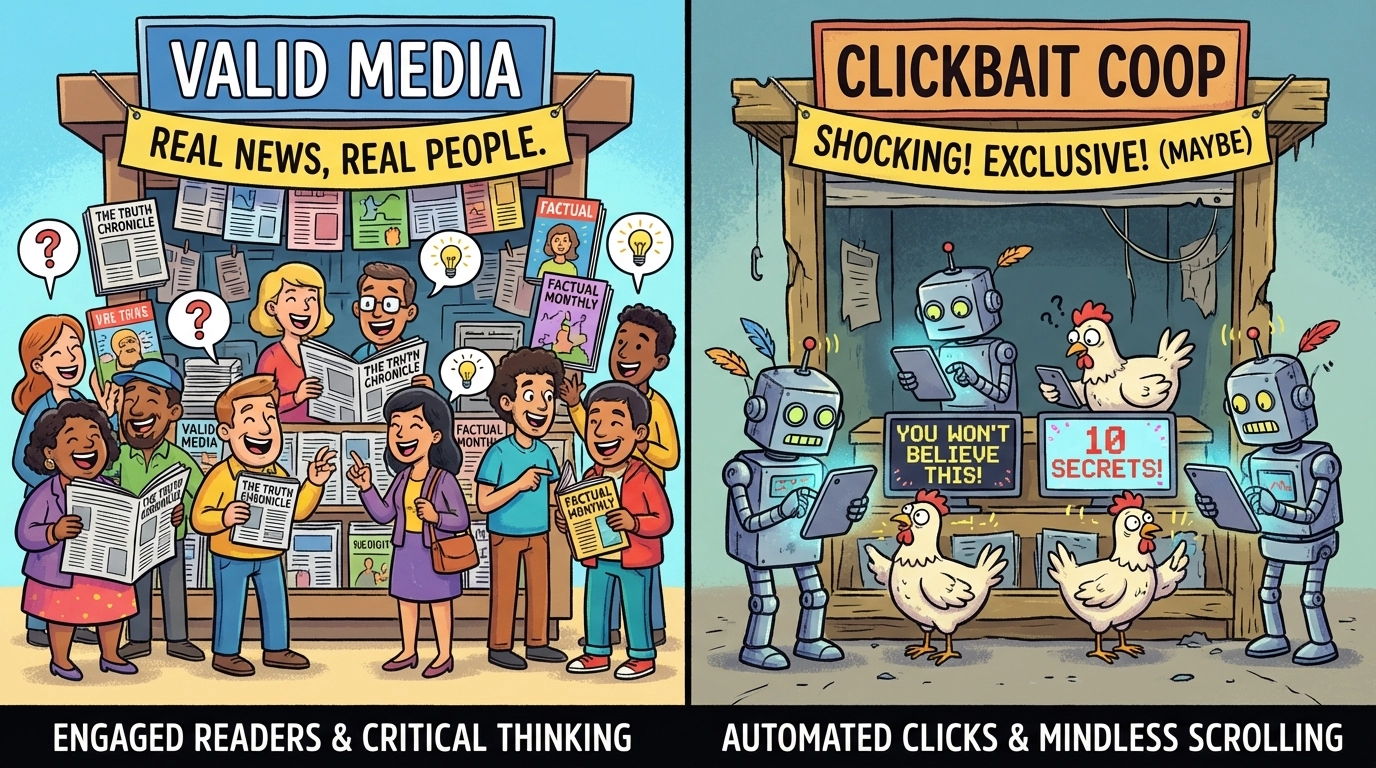
Two newsstands, two realities: Valid Media serves readers; Clickbait Coop feeds chickens and bots. Which one hatches real ROI?
Most advertisers still measure success through vanity metrics: traffic numbers, click counts, impression volumes. These numbers are comfortingly large and easy to report to stakeholders, but they're also the easiest to manipulate artificially.
Genuine online success requires validated engagement: email subscribers who open messages, social media followers who share content, website visitors who spend meaningful time consuming information, and customers who complete purchases and return for repeat business.
Platform Over-Reliance
Many advertisers assume major platforms adequately filter invalid traffic. While Google, Meta, and other platforms invest heavily in fraud detection, even Google maintains a 5.5% invalid traffic rate: still representing billions in wasted ad spend across their network.
Australian businesses often lack the resources for sophisticated fraud detection, making them particularly vulnerable to traffic manipulation that larger enterprises routinely identify and eliminate.
Short-Term Metrics Over Long-Term Value
Fake traffic provides immediate gratification through impressive dashboard numbers, but it corrupts the long-term data needed for sustainable growth. Businesses optimising for quarterly traffic targets often miss the deeper engagement patterns that drive genuine business expansion.
Moving Beyond Phantom Success
The solution isn't abandoning digital marketing: it's developing genuine success metrics and validation mechanisms.
Implement Rigorous Traffic Validation
Modern analytics tools can identify suspicious traffic patterns: unusually high bounce rates, geographically inconsistent activity, and engagement patterns that don't match human behaviour. Australian businesses should invest in fraud detection tools proportionate to their advertising spend, treating it as essential infrastructure rather than optional protection.
Focus on Downstream Metrics
Instead of celebrating top-line traffic numbers, optimise for metrics that can't be easily faked: email subscriptions from engaged users, social media shares and comments, time spent consuming content, and ultimately, validated conversions from genuine customers.
Diversify Success Measurements
Build marketing strategies that balance digital metrics with offline validation. Customer surveys, phone enquiries, in-store visits, and referral patterns provide fraud-resistant indicators of genuine marketing success.
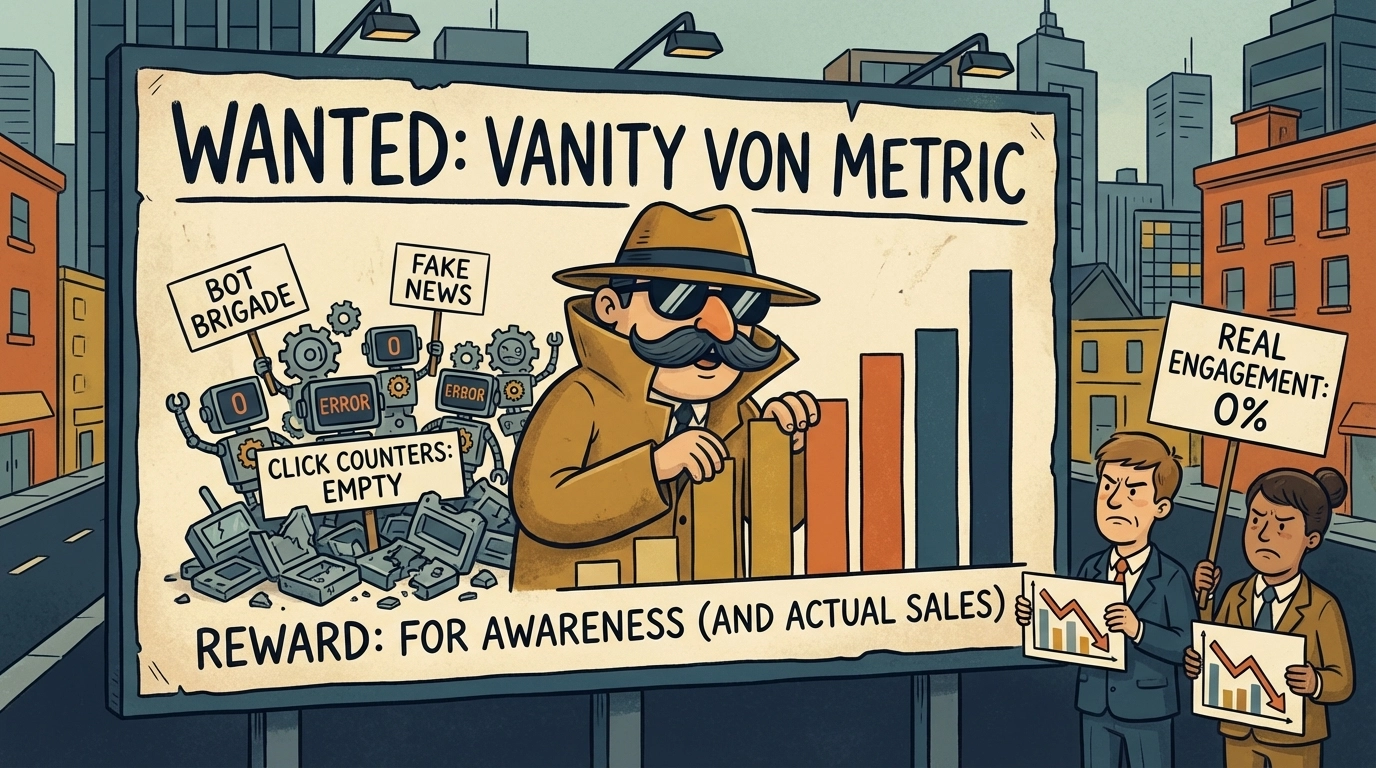
WANTED: Vanity Von Metric — a.k.a. the Dashboard Darling. Crimes: inflating impressions, impersonating success, wasting budgets. Last seen loitering near quarterly reports.
The fake traffic epidemic reveals a fundamental truth: online success isn't about generating the largest numbers: it's about creating genuine connections with real people who become lasting customers. In our final two parts, we'll explore smarter metrics for measuring authentic engagement and whether advertisers can break free from their addiction to meaningless numbers.
The Clicks v Engagement Debate
The Clicks v Engagement Debate is a five-part thought leadership series exploring how modern brands are moving beyond clicks and impressions toward smarter, more meaningful engagement metrics. It examines the limitations of traditional digital reporting and highlights how leading marketers are reshaping their measurement frameworks for real commercial impact.
The Click v Engagement Myth: Why brands need to stop chasing empty numbers
Are brands finally waking up to engagement? How modern marketers are changing their playbook
Fake news, fake traffic, and what advertisers get wrong about online success
Smarter metrics for brands: Measuring what really matters in the digital age
Are advertisers stuck in old habits? Breaking away from the clicks-first mindset


Comments