
The Click v Engagement Myth: Why Brands Need to Stop Chasing Empty Numbers (Part 1)

Updated: Jan 21
This is Part 1 of our 5-part series exploring the critical difference between clicks and engagement in modern marketing.
The marketing world has a dirty little secret: most of the clicks you're celebrating don't actually matter. While brands pour budget into campaigns designed to drive traffic and boost click-through rates, they're often chasing vanity metrics that look impressive on reports but do absolutely nothing for the bottom line.
This obsession with clicks represents one of the most expensive mistakes in modern marketing. It's time to acknowledge an uncomfortable truth: website clicks without engagement are essentially worthless, and the brands that recognise this shift first will dominate their markets while competitors waste resources on meaningless metrics.

Caption: A giant 'CLICK NOW' screams for attention while a puzzled crowd strolls past — empty clicks shout loudly, engagement speaks quietly.
The Great Click Deception
Every day, millions of dollars flow into digital advertising campaigns with one primary goal: generating clicks. Marketing teams celebrate when click-through rates spike, agencies present impressive traffic reports, and executives nod approvingly at growing visitor numbers. But here's what those reports don't reveal: only 2% of visitors actually convert after clicking through to a landing page.
Think about that statistic for a moment. For every 100 people who click your carefully crafted advertisement, 98 of them will leave without taking any meaningful action. They won't buy your product, sign up for your newsletter, download your resources, or even spend more than a few seconds engaging with your content. They've consumed your advertising spend and given you nothing valuable in return.
This phenomenon has created a dangerous illusion in marketing departments worldwide. High click-through rates create the appearance of campaign success when they often simply indicate that an advertisement momentarily captured someone's attention. It's the digital equivalent of someone glancing at a billboard while stuck in traffic: brief, shallow, and ultimately meaningless for business outcomes.
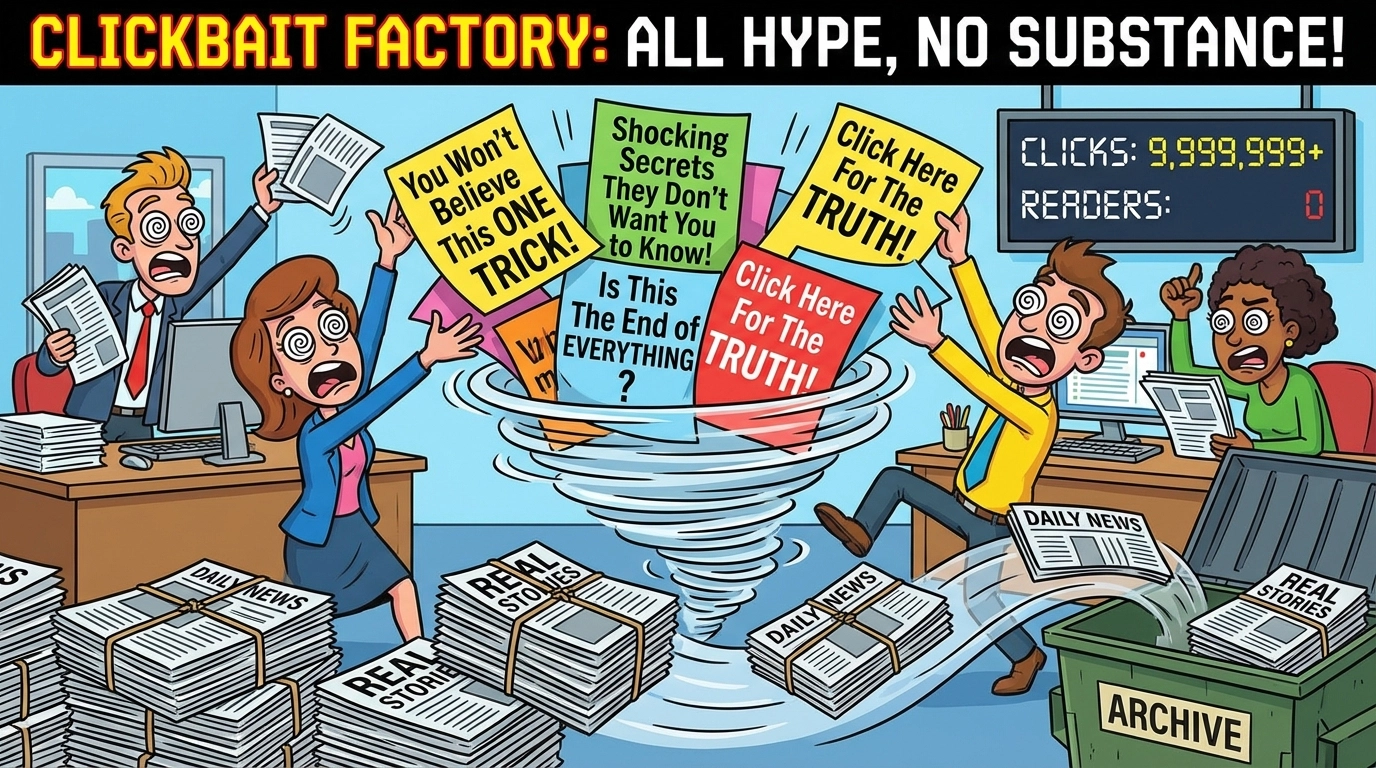
Caption: In the 'You Won't Believe...' newsroom, headlines fly out the window — trust, unfortunately, doesn't follow.
How Clickbait Culture Destroyed Marketing Value
The rise of clickbait culture has made this problem exponentially worse. Social media platforms and content publishers discovered they could game the system by crafting headlines designed purely to trigger clicks, regardless of whether the content delivered on its promises. This approach trained both marketers and audiences to prioritise immediate gratification over genuine value.
Clickbait headlines like "You Won't Believe What Happens Next" or "This Simple Trick Will Change Your Life" became the gold standard for driving traffic. Marketing teams adopted these tactics, creating advertisements that promised the world but delivered disappointment. The result? A generation of internet users who've learned to click impulsively and leave immediately when content doesn't live up to its hype.
This culture has created a vicious cycle. Brands compete to craft increasingly sensational headlines and advertisements, users become more skeptical and quick to bounce, and meaningful engagement becomes harder to achieve. Meanwhile, advertising platforms reward high click-through rates with lower costs and better placement, inadvertently incentivising the very behaviour that undermines long-term marketing success.
The automotive industry provides a perfect example of this dysfunction. Car manufacturers spend millions on digital advertisements that generate impressive click volumes, but dealership visits and actual sales remain disappointing. The disconnect between clicks and conversions reveals the fundamental flaw in click-focused strategies.
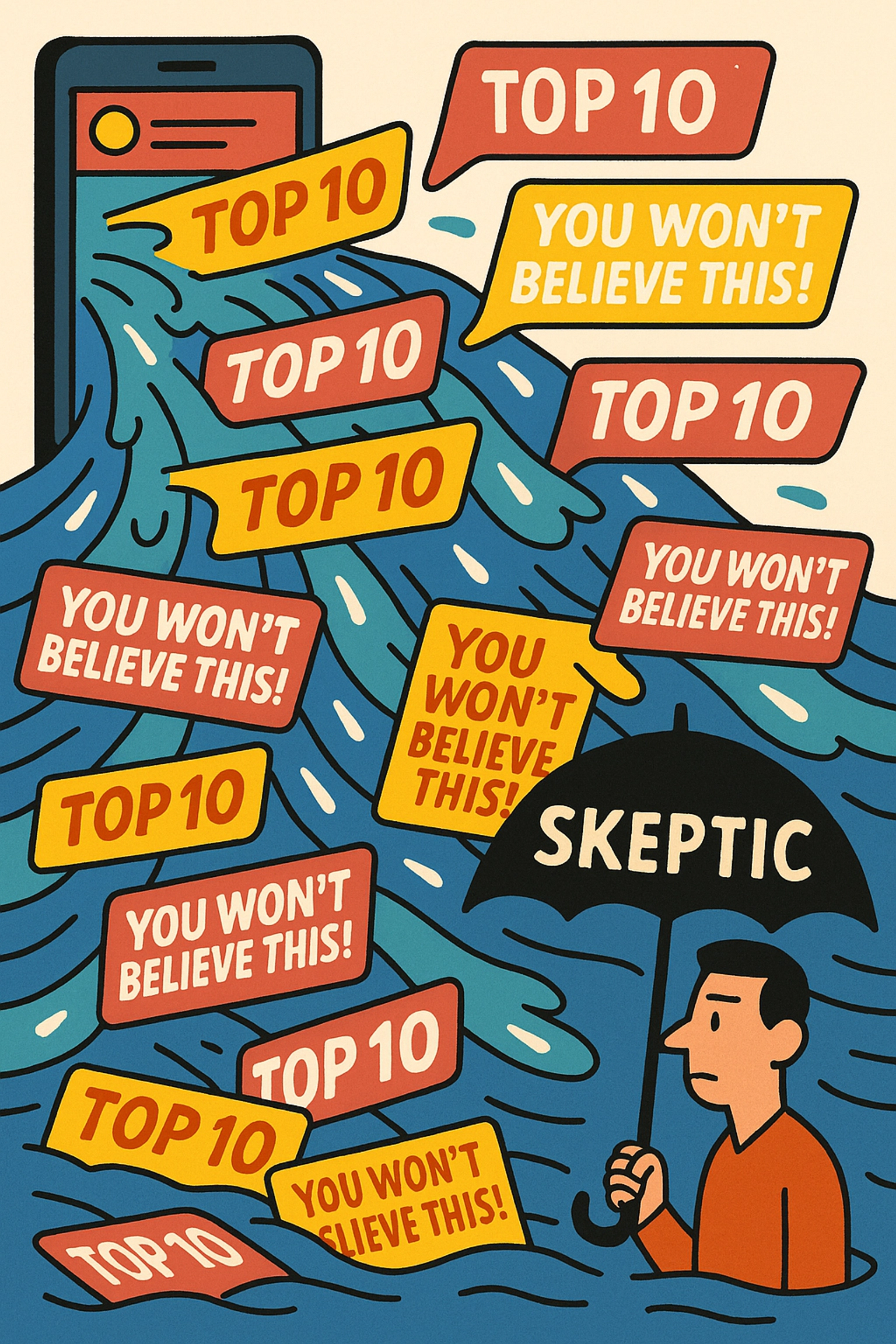
Caption: When every post is a 'Top 10', savvy audiences pack umbrellas — low-value content rains clicks, not conviction.
What Real Engagement Actually Means
Genuine engagement represents the polar opposite of empty clicks. It measures whether users actually care about your brand, find value in your content, and take meaningful actions that indicate purchase intent or brand loyalty. Unlike clicks, engagement metrics reveal the quality of your marketing efforts rather than just their reach.
Real engagement manifests in several key behaviours. Users who are genuinely engaged spend significant time consuming your content, exploring multiple pages on your website, and returning for repeat visits. They share your content with their networks, leave comments or reviews, and interact with your brand across multiple touchpoints. Most importantly, they convert at dramatically higher rates.
The business impact of prioritising engagement over clicks is remarkable. Companies that focus on customer engagement experience up to 20% growth in sales compared to those chasing traffic metrics. Engaged customers also demonstrate 23% higher lifetime value, spending more money over longer periods and requiring less expensive acquisition efforts for repeat purchases.
Consider the difference between a user who clicks an advertisement, spends three seconds scanning your homepage, and immediately leaves versus someone who clicks through, reads an entire blog post, explores your product pages, and subscribes to your newsletter. Both interactions generate identical click metrics, but their business value couldn't be more different.
True engagement also creates compound effects that clicks never achieve. Engaged users become brand advocates who recommend your products to friends and colleagues. They provide valuable feedback that improves your offerings. They're more likely to try new products and services you introduce. These behaviours generate long-term value that far exceeds the cost of acquiring them.

The Hidden Costs of Chasing Empty Numbers
The obsession with clicks carries significant hidden costs that most brands fail to calculate. Beyond the obvious waste of advertising spend on low-converting traffic, click-focused strategies create opportunity costs that compound over time.
First, chasing clicks often leads to targeting the wrong audiences. Algorithms optimise for users most likely to click rather than users most likely to purchase or engage meaningfully with your brand. This means your advertisements increasingly reach bargain hunters, competition researchers, and casual browsers instead of qualified prospects.
Second, click-focused campaigns typically drive traffic to poorly optimised landing pages. When the primary goal is generating clicks rather than conversions, teams spend less time ensuring the user experience after the click supports business objectives. The result is high bounce rates, poor user experiences, and missed opportunities to capture genuinely interested prospects.
Third, click metrics provide false confidence that prevents teams from addressing fundamental problems with their marketing strategies. When click-through rates are strong, teams assume their campaigns are working and avoid the difficult work of improving their value propositions, landing pages, or overall customer experience.
Perhaps most dangerously, click-obsessed marketing creates adversarial relationships between brands and customers. When advertisements overpromise to generate clicks, users feel deceived when they reach landing pages that don't deliver on expectations. This damages brand trust and makes future engagement significantly more difficult to achieve.
The sports marketing sector illustrates these costs perfectly. Sports brands that focus on generating clicks to merchandise pages often attract price-comparison shoppers who have no loyalty to specific teams or athletes. Meanwhile, brands that prioritise engagement build emotional connections with fans who purchase season tickets, attend events, and buy premium merchandise at full retail prices.
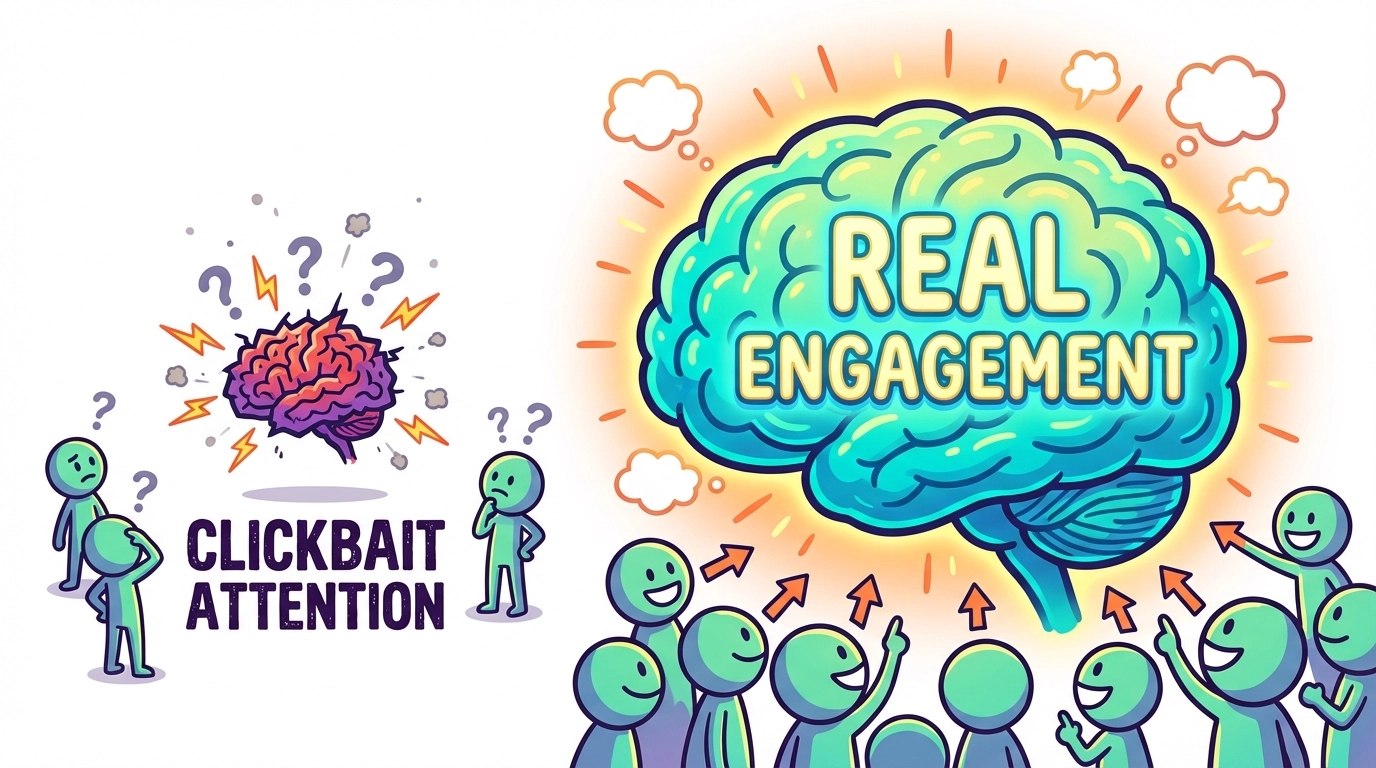
Caption: Two brains, two outcomes — frazzled 'clickbait attention' vs glowing 'real engagement'. The crowd knows which one pays off.
Building the Foundation for Change
Breaking free from click obsession requires a fundamental shift in how marketing teams measure success. Instead of celebrating traffic spikes and click-through rates, organisations need to develop measurement frameworks that prioritise business outcomes over vanity metrics.
This transition starts with identifying which engagement metrics actually correlate with business success for your specific industry and business model. For e-commerce brands, this might include time spent on product pages, cart abandonment recovery rates, and repeat purchase behaviour. For service businesses, relevant metrics might include resource downloads, consultation requests, and referral generation.
The key is developing measurement systems that connect marketing activities to revenue outcomes rather than intermediate metrics that may or may not indicate business success. This requires more sophisticated analytics and attribution modelling, but the investment pays dividends through improved marketing efficiency and effectiveness.
Teams also need to restructure their incentives and reporting to support engagement-focused strategies. When marketing managers are rewarded for click generation rather than conversion optimisation, they'll naturally prioritise tactics that drive short-term traffic over long-term value creation.
What's Next in This Series
Over the next four posts, we'll explore different aspects of the engagement revolution that's transforming modern marketing. Part 2 will examine whether brands are finally waking up to engagement, looking at industry leaders who've successfully made this transition and the competitive advantages they've gained.
Part 3 will dive deep into how fake news and fake traffic compound the problems created by click-focused strategies, revealing what advertisers consistently get wrong about digital attribution and audience quality.
Part 4 will provide practical frameworks for developing smarter metrics that actually drive business growth, including specific measurement approaches for different industries and business models.
Finally, Part 5 will address whether advertisers are stuck in old habits and explore the organisational changes required to successfully prioritise engagement over empty metrics.
The brands that embrace this shift now will build sustainable competitive advantages while their competitors continue wasting resources on meaningless clicks. The question isn't whether this transition will happen: it's whether your brand will lead the change or be forced to catch up later.
The age of empty clicks is ending. The era of meaningful engagement has begun. Make sure you're on the right side of this transformation.
The Clicks v Engagement Debate
The Clicks v Engagement Debate is a five-part thought leadership series exploring how modern brands are moving beyond clicks and impressions toward smarter, more meaningful engagement metrics. It examines the limitations of traditional digital reporting and highlights how leading marketers are reshaping their measurement frameworks for real commercial impact.
The Click v Engagement Myth: Why brands need to stop chasing empty numbers
Are brands finally waking up to engagement? How modern marketers are changing their playbook
Fake news, fake traffic, and what advertisers get wrong about online success
Smarter metrics for brands: Measuring what really matters in the digital age
Are advertisers stuck in old habits? Breaking away from the clicks-first mindset

Comments